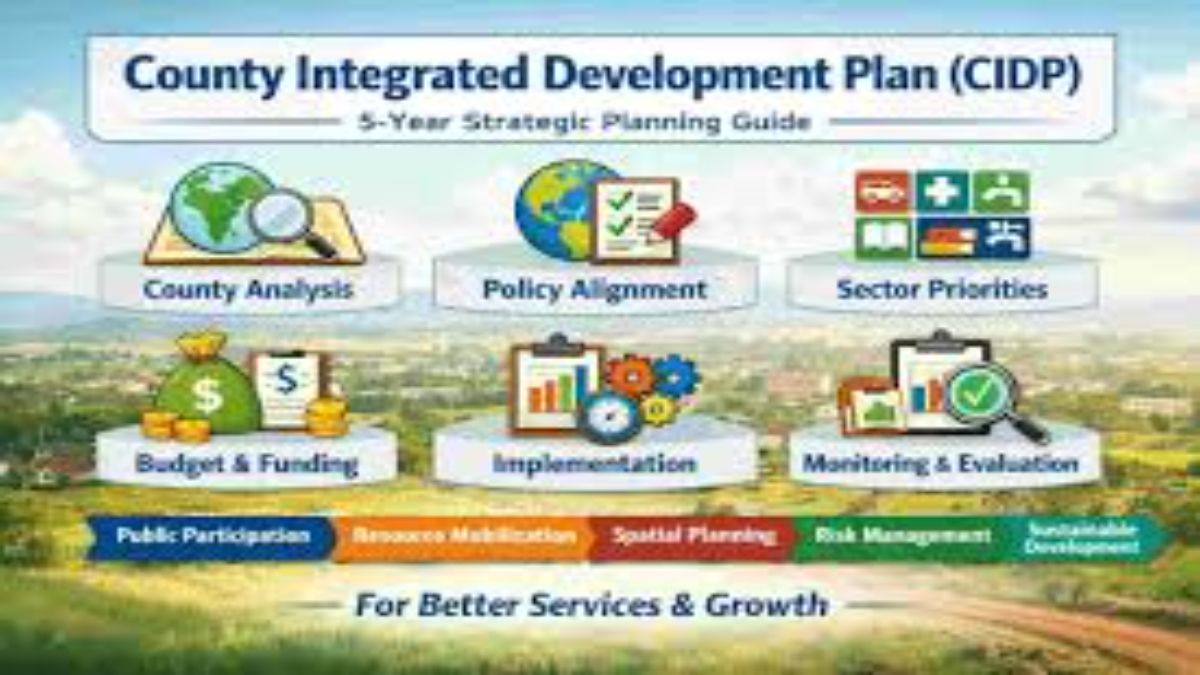
When I explore how local governments plan their growth and development, one concept that often stands out is the County Integrated Development Plan (CIDP). It serves as a comprehensive roadmap that guides how a county allocates resources, prioritizes projects, and improves the well-being of its residents over several years. A county cannot grow randomly; it requires structured planning, community input, and strategic direction. That is where the County Integrated Development Plan plays a critical role.
A CIDP is more than just a policy document. It is a framework that connects social, economic, environmental, and infrastructural development within a county. Through careful planning and consultation, county governments design this plan to address challenges such as poverty, inadequate infrastructure, unemployment, and environmental sustainability.
In this article, I will explain what a County Integrated Development Plan is, why it matters, how it is created, its key components, and the role it plays in improving governance and development outcomes.
Understanding the Concept of a County Integrated Development Plan
A County Integrated Development Plan (CIDP) is a long-term strategic planning document prepared by county governments to guide development activities within their jurisdiction. Typically, the plan covers a five-year period and aligns with national development strategies.
The word “integrated” is central to understanding the CIDP. It means that different sectors such as health, education, infrastructure, agriculture, environment, and economic development are planned together rather than separately.
The CIDP provides answers to important questions such as:
- What are the development priorities of the county?
- How will public resources be used?
- Which projects should be implemented first?
- How will progress be monitored and evaluated?
By addressing these questions, the plan ensures that development initiatives are coordinated, transparent, and aligned with the needs of residents.
The Purpose of a County Integrated Development Plan
Strategic Direction for Development
One of the main purposes of the CIDP is to provide clear strategic direction for a county. Instead of implementing projects randomly, county leaders follow a structured roadmap that outlines development goals and priorities.
Efficient Use of Resources
Counties often have limited financial and human resources. The CIDP helps allocate these resources effectively by identifying the most important development needs.
Promoting Inclusive Development
The planning process usually involves public participation, allowing citizens to share their views on the projects and services they need most. This ensures that development plans reflect the real needs of communities.
Improving Governance and Accountability
A CIDP strengthens governance by clearly outlining what the county government plans to achieve within a specific period. Citizens can track progress and hold leaders accountable for implementing projects.
Legal and Policy Foundations of County Integrated Development Plans
Many countries require local governments to prepare development plans under national laws or policies. For example, in devolved governance systems, counties or regional governments must create integrated development plans to guide budgeting and policy implementation.
The legal framework usually outlines:
- The duration of the development plan
- The process of public participation
- Alignment with national development goals
- Monitoring and evaluation mechanisms
These legal provisions ensure that county development planning remains transparent, structured, and accountable.
Key Principles of a County Integrated Development Plan
Integration
The CIDP integrates multiple sectors of development into one unified strategy. This prevents duplication of projects and promotes coordination across government departments.
Sustainability
Development projects proposed in the CIDP must consider long-term environmental, economic, and social sustainability.
Participation
Community participation is essential in the planning process. Citizens, civil society groups, businesses, and other stakeholders contribute ideas and feedback.
Equity
The plan aims to ensure that development benefits all regions within the county, including marginalized communities.
Transparency
Planning, budgeting, and implementation processes should remain open and accessible to the public.
Components of a County Integrated Development Plan
A well-prepared CIDP contains several key components that guide the development process.
Situational Analysis
The first section provides an overview of the county’s current situation. This includes:
- Population demographics
- Economic activities
- Infrastructure availability
- Social services
- Environmental conditions
This analysis helps planners understand the county’s strengths, weaknesses, opportunities, and challenges.
Development Priorities
After assessing the county’s situation, planners identify the most urgent development priorities. These priorities often include:
- Improving healthcare services
- Expanding educational facilities
- Enhancing agricultural productivity
- Developing infrastructure such as roads and water systems
Strategic Objectives
Each development priority is supported by specific strategic objectives. These objectives define what the county government intends to achieve within the planning period.
Implementation Framework
The implementation framework outlines how development projects will be executed. It specifies:
- Responsible government departments
- Project timelines
- Budget requirements
- Expected outcomes
Monitoring and Evaluation
A CIDP also includes mechanisms to track project progress and measure results. Monitoring and evaluation ensure that the county government stays on course and makes adjustments when necessary.
The Process of Developing a County Integrated Development Plan
Step 1: Data Collection and Research
The planning process begins with collecting data about the county’s social, economic, and environmental conditions. This information forms the basis for development decisions.
Step 2: Stakeholder Engagement
Public participation is a key part of CIDP development. Citizens, community organizations, businesses, and government agencies contribute ideas and recommendations.
Step 3: Drafting the Plan
Experts and planners compile the information gathered and draft the development plan. The draft outlines priorities, projects, and implementation strategies.
Step 4: Public Review and Feedback
The draft plan is usually presented to the public for review. Feedback from stakeholders helps refine and improve the document.
Step 5: Approval by Authorities
After revisions, the plan is submitted to the relevant authorities, such as the county assembly or council, for approval.
Step 6: Implementation
Once approved, the county government begins implementing the projects outlined in the CIDP.
Role of Public Participation in CIDP
Public participation is one of the most important elements of the County Integrated Development Plan.
Community Engagement
Residents are invited to attend public forums where they can share their concerns and suggestions regarding development priorities.
Inclusion of Marginalized Groups
The process often ensures that women, youth, people with disabilities, and marginalized communities have a voice in development planning.
Building Trust Between Government and Citizens
When citizens participate in decision-making, they develop greater trust in government institutions.
Importance of County Integrated Development Plans
Coordinated Development
The CIDP ensures that all sectors of development work together rather than independently.
Long-Term Planning
By covering several years, the plan provides long-term direction rather than short-term solutions.
Better Budgeting
County budgets are usually aligned with CIDP priorities, ensuring that funds are used for planned projects.
Improved Service Delivery
When development is well planned, counties can deliver better services such as healthcare, education, and infrastructure.
Attracting Investment
Clear development plans can attract investors by showing the county’s growth potential and strategic priorities.
Examples of Development Areas Covered in a CIDP
A County Integrated Development Plan usually addresses multiple sectors that influence local development.
Infrastructure Development
Infrastructure projects often include:
- Road construction and maintenance
- Water supply systems
- Electricity access
- Public transport systems
Healthcare Services
Healthcare development may involve:
- Building hospitals and clinics
- Expanding healthcare staff
- Improving access to medicines and equipment
Education and Skills Development
CIDPs often include plans to improve education through:
- Construction of schools
- Teacher recruitment and training
- Vocational training programs
Agricultural Development
Agriculture is a key sector in many counties. Development initiatives may include:
- Irrigation systems
- Agricultural training programs
- Access to markets for farmers
Environmental Management
Sustainable development requires environmental protection measures such as:
- Forest conservation
- Waste management systems
- Climate change adaptation strategies
Challenges in Implementing County Integrated Development Plans
Despite their importance, CIDPs can face several challenges during implementation.
Limited Financial Resources
Counties may struggle to fund all planned projects due to limited budgets.
Political Interference
Political changes or conflicts may disrupt the implementation of development plans.
Weak Monitoring Systems
Without proper monitoring and evaluation, it becomes difficult to track project progress.
Lack of Community Awareness
Sometimes residents are unaware of the CIDP and therefore cannot participate effectively in development planning.
Strategies for Improving CIDP Implementation
Strengthening Institutional Capacity
County governments need skilled planners, economists, and development experts to design and implement CIDPs effectively.
Increasing Public Awareness
Public education campaigns can help citizens understand the CIDP and participate in its implementation.
Enhancing Transparency
Publishing progress reports and budget allocations improves accountability.
Strengthening Partnerships
Collaboration with private sector organizations, non-governmental organizations, and development partners can support project implement.
Relationship Between CIDP and Budget Planning
A County Integrated Development Plan is closely linked to the county budgeting process.
Each year, county governments prepare budgets that fund specific projects outlined in the CIDP. This ensures that financial resources align with long-term development goals.
For example:
- If the CIDP prioritizes road infrastructure, the county budget allocates funds for road construction and maintenance.
- If healthcare improvement is a priority, funds are allocated for hospital equipment and staff recruitment.
This alignment ensures consistency between planning and financial management.
Monitoring and Evaluation of County Integrated Development Plans
Monitoring and evaluation are essential for determining whether the CIDP is achieving its intended outcomes.
Performance Indicators
Counties establish measurable indicators such as:
- Number of roads constructed
- Number of healthcare facilities built
- Agricultural productivity levels
Progress Reports
Government departments regularly report on project progress and challenges.
Independent Reviews
Sometimes external organizations evaluate development plans to provide objective assessments.
Monitoring and evaluation help identify areas that need improvement and ensure accountability.
The Future of County Integrated Development Planning
As counties continue to evolve, the approach to integrated development planning is also changing.
Digital Planning Tools
Modern technology allows counties to use digital platforms for data collection, planning, and monitoring.
Data-Driven Decision Making
Better access to data helps planners make more informed decisions about development priorities.
Sustainable Development Goals Alignment
Many CIDPs now align with global development frameworks such as the Sustainable Development Goals (SDGs).
Greater Citizen Participation
Online platforms and community engagement tools are increasing citizen participation in development planning.
Benefits of Effective County Integrated Development Plans
When implemented effectively, a CIDP can transform a county’s development landscape.
Some key benefits include:
- Improved infrastructure and public services
- Increased economic opportunities
- Better management of natural resources
- Stronger community engagement in governance
- Enhanced transparency and accountability
These benefits contribute to improved quality of life for residents and sustainable economic growth.
Conclusion
When I look at how local governments manage development, the County Integrated Development Plan stands out as one of the most important planning tools. It provides a structured approach to identifying priorities, allocating resources, and implementing projects that improve the lives of residents.
A CIDP ensures that development efforts are coordinated, inclusive, and aligned with long-term goals. Through community participation, strategic planning, and effective implementation, counties can address challenges such as poverty, infrastructure gaps, and environmental sustainability.
Although challenges such as limited funding and political interference may arise, strong governance, transparency, and stakeholder collaboration can help overcome these obstacles.
FAQs
Q1. What is a County Integrated Development Plan (CIDP)?
A County Integrated Development Plan (CIDP) is a strategic document that guides development activities within a county for a specific period, usually five years. It outlines priorities, development goals, and projects that a county government plans to implement in sectors such as infrastructure, health, education, agriculture, and economic development.
Q2. Why is a County Integrated Development Plan important?
A CIDP is important because it provides a clear roadmap for county development. It ensures that resources are used efficiently, projects are prioritized based on community needs, and development activities are coordinated across different sectors.
Q3. How long does a County Integrated Development Plan last?
Most County Integrated Development Plans are designed to cover a five-year period. This timeline allows counties to set realistic development goals, implement projects, and evaluate progress before preparing a new plan.
Q4. Who prepares a County Integrated Development Plan?
A CIDP is prepared by the county government through a collaborative process involving planners, government departments, community representatives, development experts, and stakeholders from various sectors.
Q5. What sectors are typically included in a CIDP?
A County Integrated Development Plan usually covers several development sectors, including:
- Infrastructure and transport
- Healthcare services
- Education and training
- Agriculture and food security
- Water and sanitation
- Environmental management
- Economic development and job creation.